The engine cuts out, and the forest takes over. Water slaps the hull. The air smells of salt, wet mud and something green and very old. A kingfisher flashes blue across the creek. Somewhere in the wall of roots on the bank, a branch snaps, and every head on deck turns at once.
This is the Sundarbans, the world's largest mangrove forest and a UNESCO World Heritage Site. There are no roads here. The tide sets the schedule, the river is the only path, and the jungle starts at the waterline. At Roam Bengal, we've spent years on these channels, and we still lower our voices when the engine goes quiet. Here is how to do it properly.
🌿 When to Go
October to March is the window. Mornings are cool, skies are clear, and animals come down to the water. In winter, a thin mist often hangs over the creeks at dawn, and the light turns the mud to gold. Most visitors find December and January the sweet spot. Skip the monsoon months: storms and tidal surges make the water unpredictable, and most operators pause trips.
📋 Getting There and Permits
Trips start from Mongla, about six hours from Dhaka by road, or from Khulna, which you can reach by flying to Jessore and driving an hour. Khulna and Mongla are the two gateways, and either works well if you plan the transfer around your flight.
You cannot enter on your own. The forest requires a Forest Department permit, a licensed guide and an armed forest guard. Fees for foreigners differ from local rates, and published figures vary, so confirm the current cost before you book. Roam Bengal arranges the permits, guards, and paperwork, and the price is [included / $X]. You never queue at an office or chase a signature.
🚢 Three Days on the Water
Day 1- Harbaria and Kochikhali- We meet at the Mongla ferry ghat at [6:00 to 6:30 AM], board our private boat, and have breakfast on board. Within fifteen minutes, you're inside the forest. We stop briefly at a forest station for the formalities, then head toward Kochikhali through tiny canals that bigger boats can't enter. Along the way, we stop at Harbaria Eco Park for a thirty-minute walk, your first taste of the forest. Many day tours end here, and we don't recommend it. This is the doorway, not the room. Before sunset, we switch to a noiseless wooden rowboat and drift along a small canal, listening for birds and watching the banks, because animals come down to drink at dusk. By evening we reach Kochikhali and anchor in the river for the night, in a private cabin.
Day 2- Jamtola and Kotka- This is the busiest day. We wake before dawn for another quiet rowboat ride along a canal, then return to the boat for breakfast at 7:30. After that, we walk toward Jamtola Beach, one of the quietest in Bangladesh, and spend an hour there. The full walking trail is about 10 kilometres, so wear good shoes. The boat meets us after travelling around an inner canal. After lunch and a rest, we visit Kotka Wildlife Sanctuary and take a canal cruise if the tide is high. Late in the afternoon, we climb the watchtower and sit still for half an hour. Deer and other animals come to graze and drink, and the forest often delivers surprises. After sunset, the boat moves to a suitable forest station for the night, depending on the tide.
Day 3- Fishing village and crocodiles- We take a final dawn rowboat ride at 6:00, then have breakfast at 7:30 and head back toward Mongla through smaller rivers and canals. Along the way, we visit a fishing village and the Karamjal Crocodile Breeding Centre. We reach Mongla in the late afternoon, around [4 to 5 PM], and we can drive you on to Khulna, about an hour and a half away.
👀 What You Will See
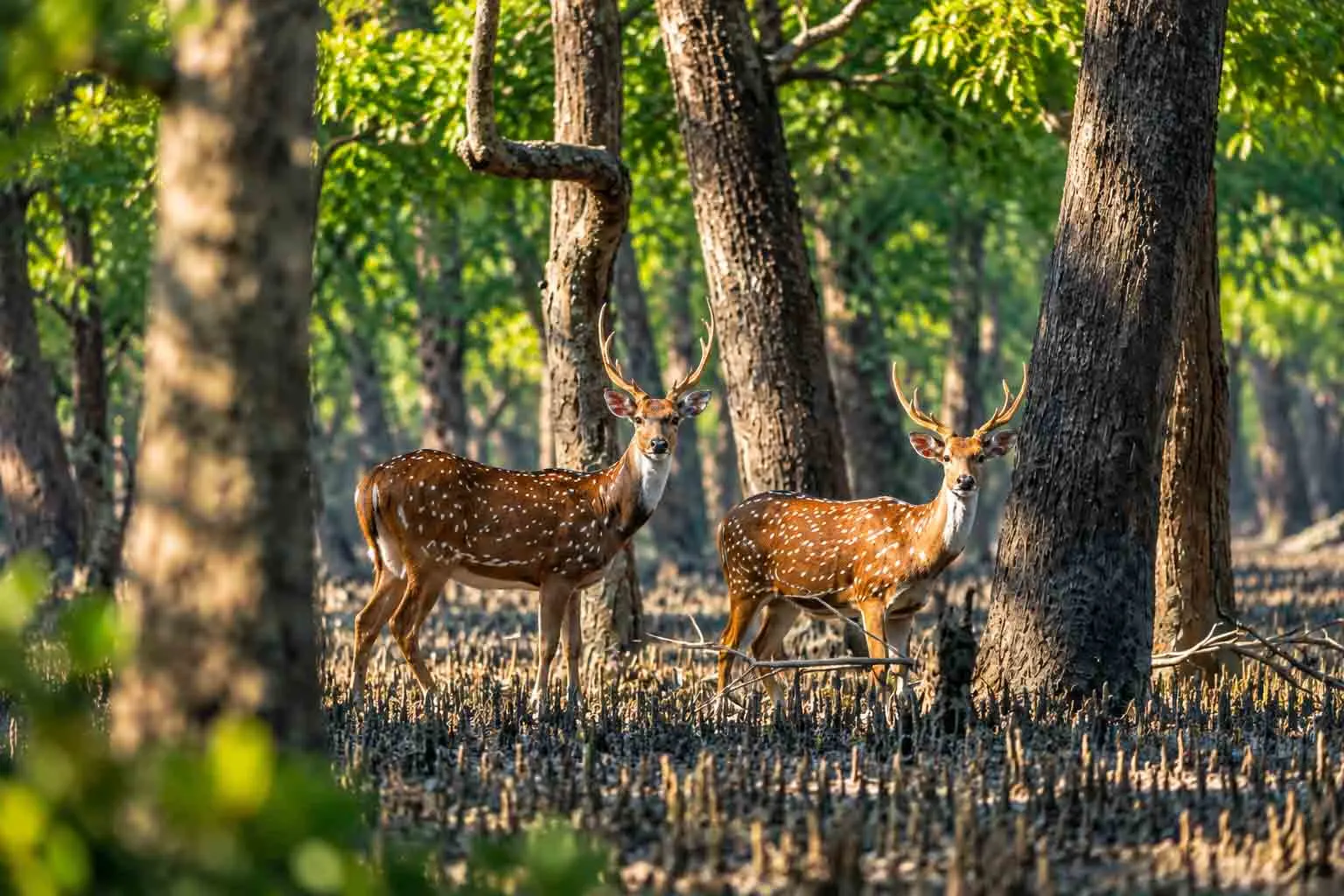
Sundari trees stand in black mud, with breathing roots poking up like pencils. Spotted deer step out of the shade. Macaques squabble in the branches, crocodiles lie like logs on the banks, and sea eagles circle overhead. At low tide, mudskippers flick across the shore, and the whole forest seems to exhale.
Then there is the tiger. Be honest with yourself: sightings are rare and never guaranteed. Most travellers see fresh pugmarks and feel the stare of something unseen. That is the Sundarbans, and many find it more thrilling than a sighting.
Evenings reward patience too. As the light fades, herons and egrets settle into the branches, and the river goes the colour of pewter. Sit on deck with a cup of tea and say nothing for ten minutes. It's the best part of the day.
🛥️ Choosing Your Boat
You live on the water here, so the boat matters more than the hotel would anywhere else. Look for private cabins, a shaded deck, a clean kitchen, and a crew who has worked this forest for years. Our boats are very clean and well-equipped. Ask every operator the same three questions: how many guests, who cooks, and where the drinking water comes from. A small group changes everything, because a quiet boat sees more than a crowded one.
🎒 Before and After
Try to reach Khulna the evening before. Early starts matter in a place where the tide waits for no one, and a calm night makes the dawn departure far easier. When you return, give yourself one slow day in Dhaka, with no alarm and no schedule. The forest has a way of lingering, and most guests tell us the silence follows them home.
⚠️ Tips Before You Go
Pack long sleeves in muted greens and browns, a hat, repellent, binoculars, and other personal essentials. Phone signal comes and goes, so tell family before you leave. Keep your voice low on deck, because noise sends animals back into the trees. Never swim, and never wander off the trail. Take your rubbish back out with you, buy nothing made from wildlife, and follow the guard's instructions without debate. The rules exist because the forest is both fragile and dangerous. Drink only bottled water. On our boats, we serve mineral drinking water and meals under our supervision.
📋 The Sundarbans at a Glance
Duration: 3 days / 2 nights
Start: From Mongla
Group size: Private, up to 6 guests
Includes: permits, guides, forest guards, boats, meals, water, and unlimited tea and coffee
Best season: October to March
Price: Starting from 510$ per person
❓ Questions We Hear Often
Will I see a tiger? Probably not, and any operator who promises one is guessing. You will see wildlife, fresh tracks and some of the most beautiful water in Bangladesh.
How many days do I need? Three days is the sensible minimum. A day trip only touches the forest's edge.
Can I visit without a tour? No. Permits, a licensed guide and a forest guard are required.
Is it safe? Yes, with a licensed crew and guard. We follow their rules and the weather forecast.
🌟 Why Go With Roam Bengal
A forest this wild needs a crew that knows it. Roam Bengal's private, English-speaking guides read the tides, the weather and the creeks, and we take care of the permits, the boat and the meals. You never haggle with a boatman or wonder who is in charge. You do the looking, and we handle the rest. The forest stays wild, the crew stays calm, and your only job is to watch the water and wait for the branch to snap.
✨ Book Your Sundarbans Tour
Tell us your dates and how adventurous you are feeling, and we'll plan the trip around you.
Book your private Sundarbans tour with Roam Bengal today.
Email: [your email]
WhatsApp: [your number]